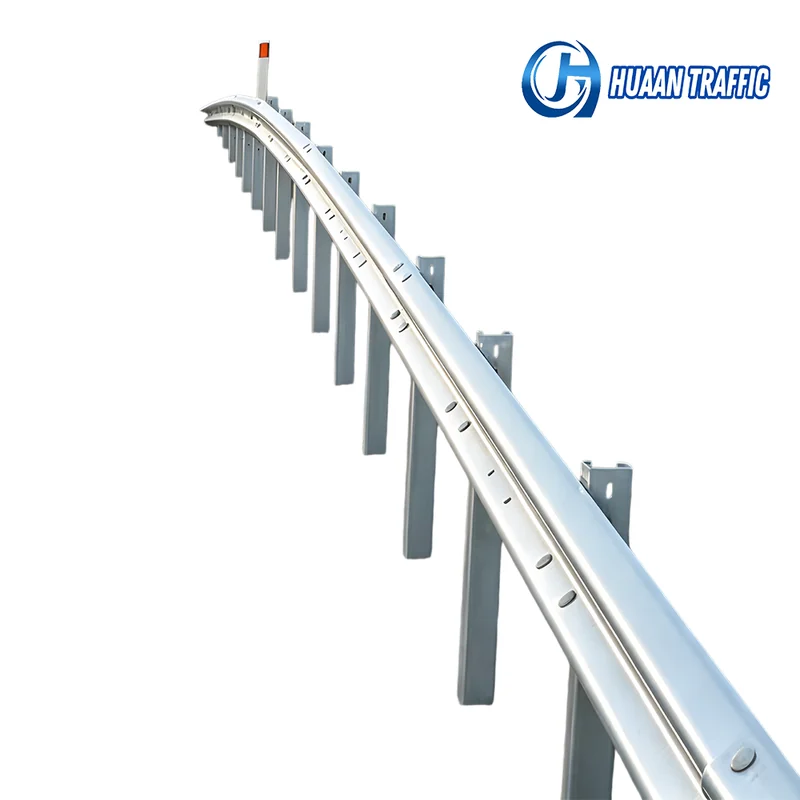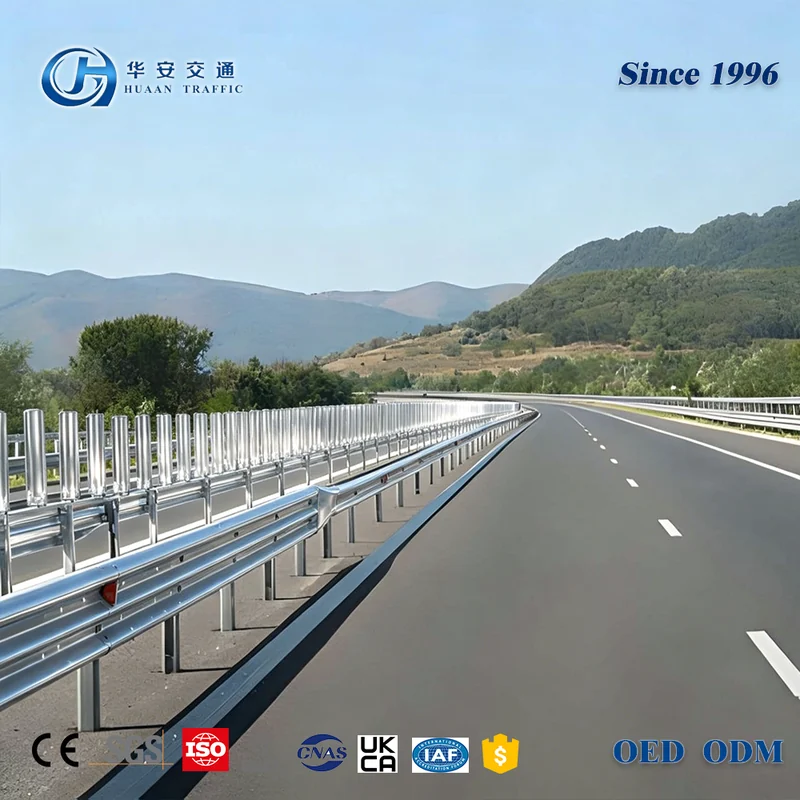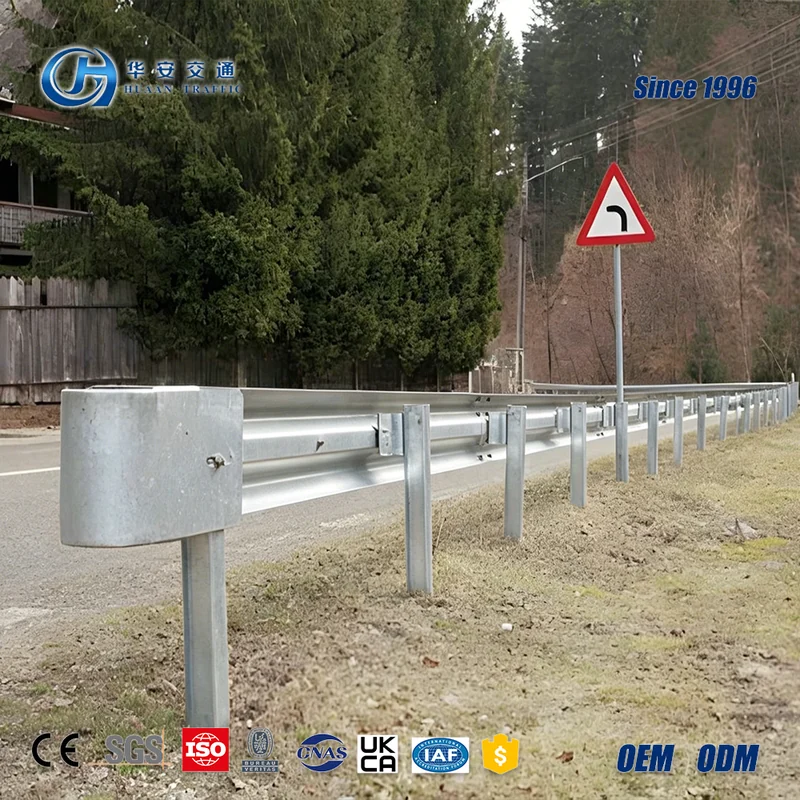
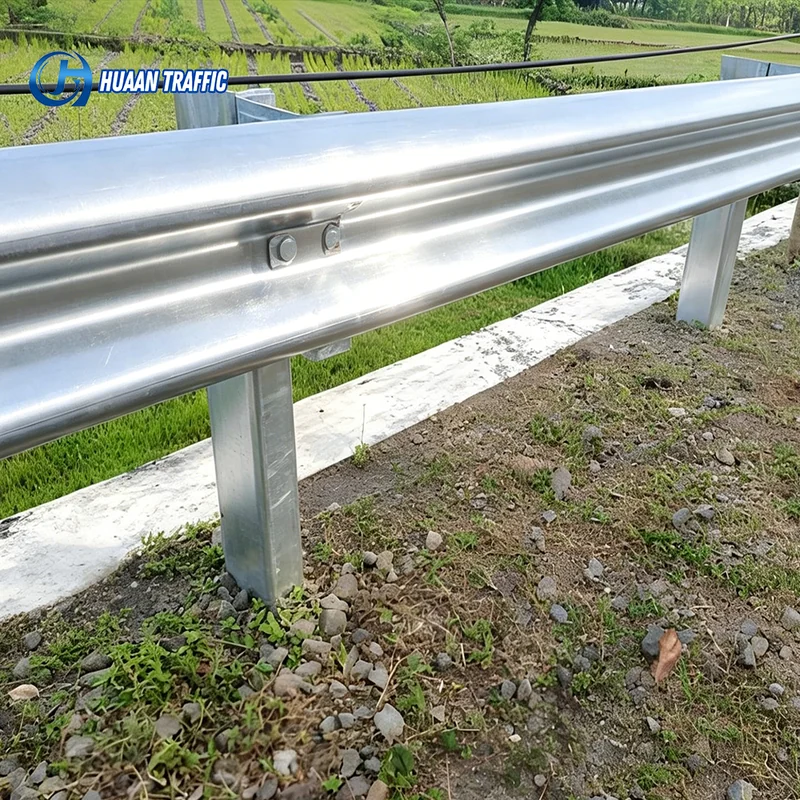
The question every buyer starts with is the price per metre. It has no answer on its own. A metre of W-beam can be 3.0 or 4.0 mm, galvanised to one of two zinc weights, on a driven post or a bolted plate, with or without a terminal at the end — and those choices move the cost by more than any supplier’s margin does.
What follows is not a price list. It is the list of things that decide the price, so that two quotations can be compared on the same basis and so that a budget can be built from parts rather than guessed from a headline rate.
Why there is no single rate per metre
Two things make a universal rate impossible, and both are worth stating plainly.
Materials move. A guardrail is steel coil, zinc and — if it is coated — polyester powder, plus freight on all three. Those inputs are traded, and they move between one month and the next. A quotation therefore carries a validity date. Any figure quoted without one is a figure that will be renegotiated.
Labour is local. Installation cost depends on wage levels where the work happens, on the plant available there, on how the traffic is managed and on what permits are required. The same run costs very different amounts in different countries, and often in different regions of the same country. No factory can quote it from a drawing, and any supplier who does is quoting a guess dressed as a rate.
The six things that move the number
- Steel thickness. A 4.0 mm rail carries roughly a third more steel than a 3.0 mm rail of the same length, before any coating. On the AASHTO side the same choice appears as Class A at 2.67 mm against Class B at 3.43 mm [1].
- Zinc weight. 550 g/m2 and 1,100 g/m2 both faces are the two common specifications, and the second uses roughly twice the zinc. It is a separate decision from the gauge, and it is priced separately.
- The post. A driven post, a flanged base-plate post and a cast-in post are three different parts with three different installation costs. Post spacing then multiplies it: closer spacing means more posts for the same length of run.
- Terminals. End treatments are the parts buyers underestimate. A single terminal can cost more than several rails, because it is a made assembly rather than a length of beam.
- The site. Access for a lorry-mounted driver, terrain, soil, distance from the factory and the port all sit inside the delivered price, and none of them appear on the drawing.
- Quantity and mix. One long run of one configuration is cheaper per metre than the same tonnage split across colours, profiles and lengths, because every change stops the line.
What a supplier can price, and what it cannot
This split is the single most useful thing to understand when reading a quotation.
A factory can price: the rail, the post, the blockout, the bolt set, the terminal, the coating, the packing and the freight to a named port. Those are parts and logistics, and they can be stated exactly against a drawing.
A factory cannot price: the labour to install it, the traffic management, the permits, the local haulage from port to site and the disposal of packaging. Those belong to the contractor working in that country, and they should be quoted there.
That is why a delivered guardrail quotation is normally FOB or CIF rather than installed. It is not a lack of ambition; it is the only way to keep the number honest.
Why a quotation has a validity date
Steel, zinc and freight are bought forward and priced forward. A quotation is a position taken on those markets at a moment in time, which is why a price from three months ago is not a price today and why asking a supplier to “hold last year’s rate” is really asking them to absorb the market.
The practical consequence for budgeting: get the specification fixed first, then price it close to the order date, and treat any longer-term figure as an allowance rather than a commitment.
How to compare two quotations
- Same profile? Two-wave and three-wave are not interchangeable, and a three-wave quote is not a like-for-like saving.
- Same gauge? 3.0 against 4.0 mm is the most common hidden difference between a cheap quote and an expensive one.
- Same zinc weight? 550 against 1,100 g/m2 both faces is the second most common.
- Same post? Driven, base plate and cast-in are three different products with three different prices.
- Same terminal included? Often one quote includes end treatments and one does not.
- Same incoterm and validity? FOB and CIF are not comparable, and neither are two prices quoted three months apart.
Nine times out of ten, the lower quotation is a lighter beam or a thinner zinc coating. That is not a better price; it is a different barrier.
What to send for a real number
- The drawing, with profile, gauge, zinc weight and coating colour if any.
- Total length of run, and whether it is one run or several.
- Post type and spacing, or the containment class if the post is to be set from it.
- Terminal type and quantity — these are priced separately and are easy to forget.
- Destination port, incoterm and required date.
With those five, a quotation can be firm for a stated period. Without them, the quotation is an assumption that will be reworked once the drawing arrives — which costs both sides a fortnight.
Questions buyers ask about cost
- Can you give a price per metre? Not without the specification. A rate given before the drawing exists will change once it does.
- Why is it more than last quarter? Because steel and zinc are traded inputs. The validity date on the earlier quotation is the answer.
- Is installation included? No. Material and freight are quoted from the factory; installation is priced locally.
- Does a heavier beam cost proportionally more? Roughly, on material — and slightly more than proportionally once freight on the extra weight is counted.
- Does a colour add much? A duplex coating adds a process step, not a different beam. It is a small share of the total, and it is the cheapest part of a coloured scheme to get right.
For the parts themselves, start from Beam Guardrail; where the drawing has no standard and is priced from the sheet, see Crash Barrier. Send a drawing through Contact and the quotation comes back against it.
References
[1] AASHTO M 180, Standard Specification for Corrugated Sheet Steel Beams for Highway Guardrail — Class A 2.67 mm (0.105 in), Class B 3.43 mm (0.135 in); Type I 550 g/m2, Type II 1,100 g/m2.