A drawing that says W-beam, H2W3 has said more about the barrier than one that says W-beam, 4 mm. The class is not a grade of steel — it is a statement about a complete assembly, tested as installed. That is why two suppliers can both quote “H2W3” and deliver barriers that behave differently.
Three grades inside one label
EN 1317-2 grades a vehicle restraint system on three things at once, and the label usually carries two of them [1].
- Containment level — how much impact energy the system absorbs before a vehicle passes through it.
- Working width — how far the barrier moves under that impact, which decides how much clear space the site needs behind it.
- Occupant severity — how hard the impact is on the people inside, measured separately and often not shown in the label at all.
Containment: the letters and the numbers
The levels run in three families. N1 and N2 are normal containment, used on lower-speed and lower-risk roads. H1, H2 and H3 are the high levels, with H4a and H4b above them for the heaviest duty. L1a, L1b, L2 and L3 are the low levels, used where the consequence of leaving the road is small. Within a family the number rises with the energy the system is tested against, so H2 is a heavier class than H1 and H3 is heavier than H2 [1].
Nothing about H2 says how the barrier is built. A two-wave beam, a three-wave beam and a concrete wall can all be attested to H2, and their working widths will be completely different.
Working width: how far it moves
Working width is graded W1 to W8, from up to 0.6 m of movement at W1 to more than 5.5 m at W8 [1]. The W number in H2W3 means the barrier moves between 1.0 and 1.5 m under the test impact. That figure is the one that decides whether a barrier can be used on a site at all: a verge 1.2 m wide cannot take a system whose working width is 2.5 m, whatever its containment level.
This is where most comparisons between products go wrong. Two systems both marked H2 can be W2 and W5, and the second one needs three metres of clear space the first one does not.
Occupant severity: the grade people forget
The same test also produces an occupant severity index. EN 1317-2 sets an Acceleration Severity Index of 1.0 or less and a Theoretical Head Impact Velocity of 33 km/h or less for a system to be accepted [1]. A very stiff barrier can contain a heavy vehicle and still be harsh on a small car; a very soft one can be kind to occupants and still not contain a lorry. Containment and severity are not the same axis, and one does not improve the other.
Why the class belongs to the system, not the beam
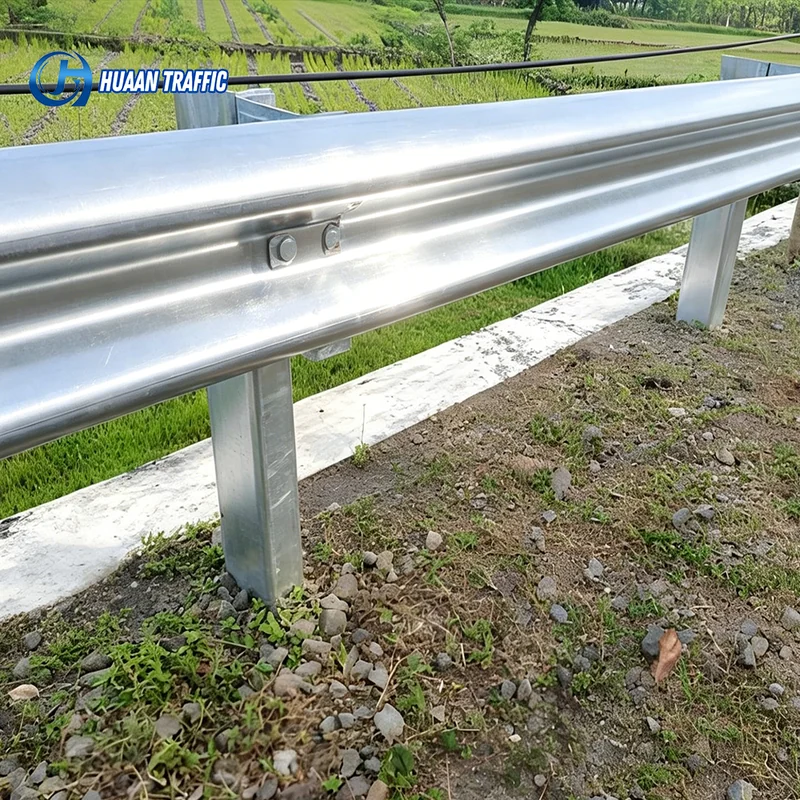
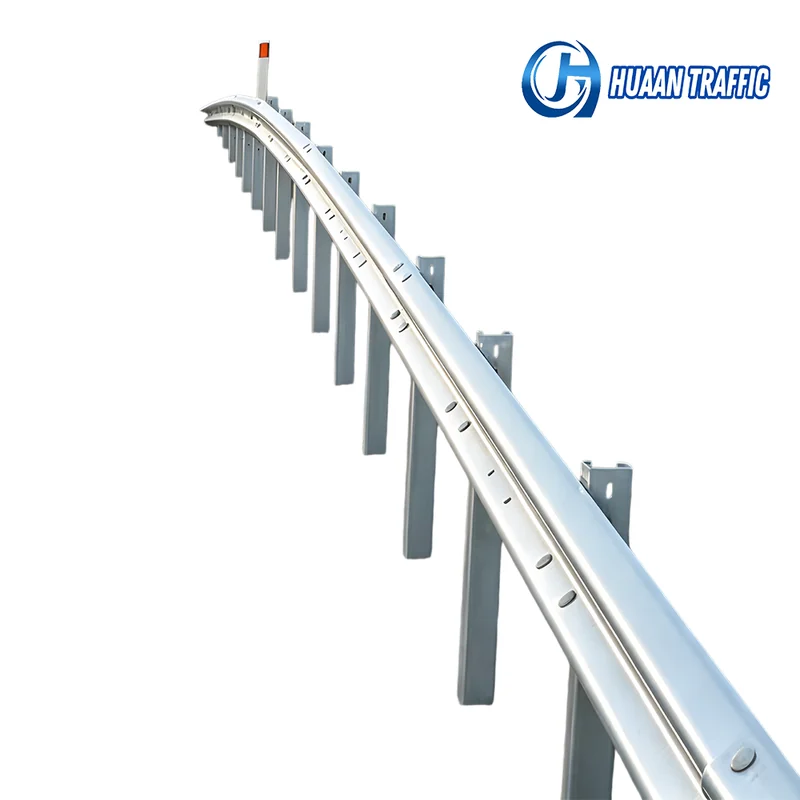
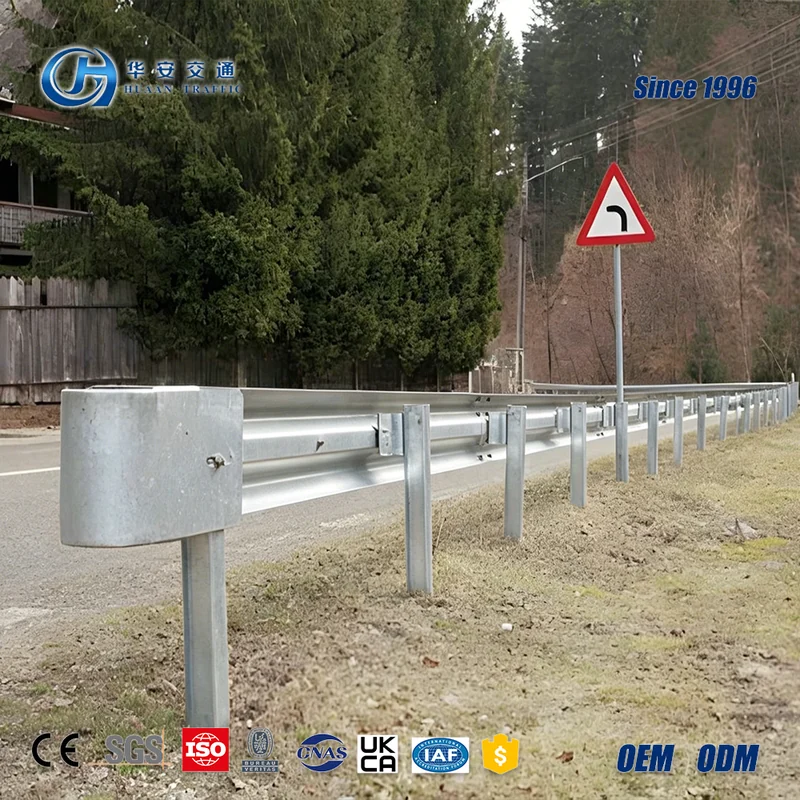
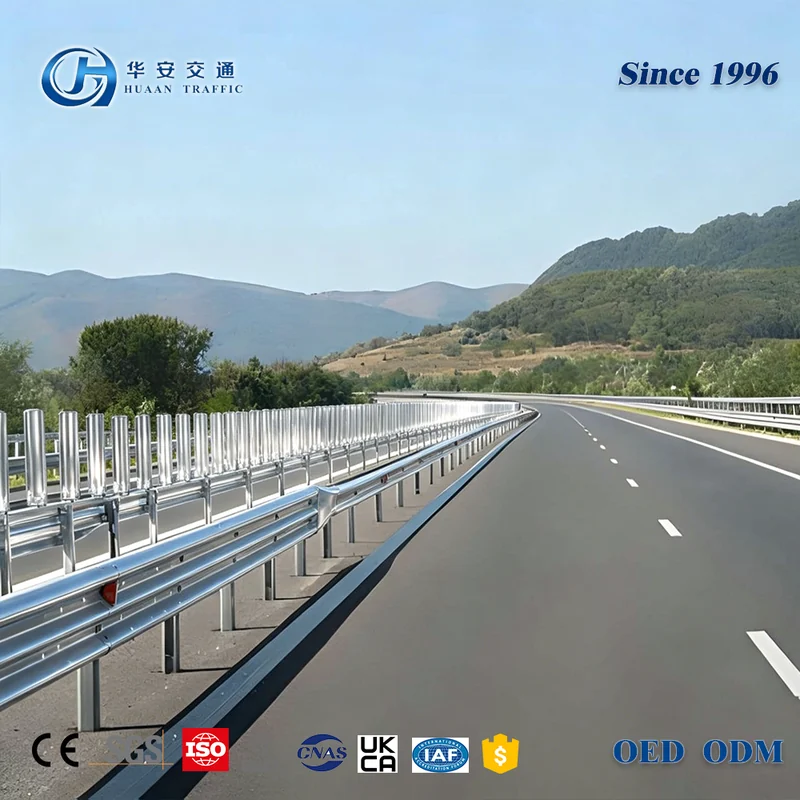
A containment class describes an installed assembly: rail, post, blockout, post spacing, embedment and anchors, together. Change one of those and the assembly is no longer the one that was tested. A rail that matches the drawing on a post at a different spacing is not an H2W3 barrier — it is an untested barrier that resembles one.
That is why the answer to “what is your H2W3 system?” is a set, not a single line item: the H2W3 thrie-beam system is quoted with its post spacing and blockout, and the Armco barrier page is written the same way, because H1W3 and H2W3 are system orders rather than beam orders.
What H1W3 and H2W3 sit between
H1 and H2 are the two high-containment classes in ordinary use on national roads, and W3 is the band most roadside steel barriers land in. That combination — a reasonably high containment with a working width the verge can actually absorb — is why H1W3 and H2W3 appear so often in specifications written to EN 1317.
Higher classes exist and are supplied, but they are not free: H3 and above usually mean a three-wave beam or a much closer post spacing, which is why they are quoted against a drawing rather than offered as an upgrade.
What the class does not tell you
- Zinc weight or coating. Corrosion protection is a separate specification.
- Colour. A finish decision, not a safety one.
- End treatment. Terminals are graded separately and chosen for the site.
- Length. The class does not fix the rail length; the layout does.
What a drawing should state
Containment class and working width, then the four things the class depends on: rail profile, post profile, post spacing and blockout depth. If a drawing names the class and stops there, it has not specified a barrier — it has named a test result and left the assembly open.
For the metric dimensions behind these labels, see W-Beam Guardrail Dimensions.
References
[1] EN 1317-2, Road restraint systems — Performance classes, impact test acceptance criteria and test performance for safety barriers.